


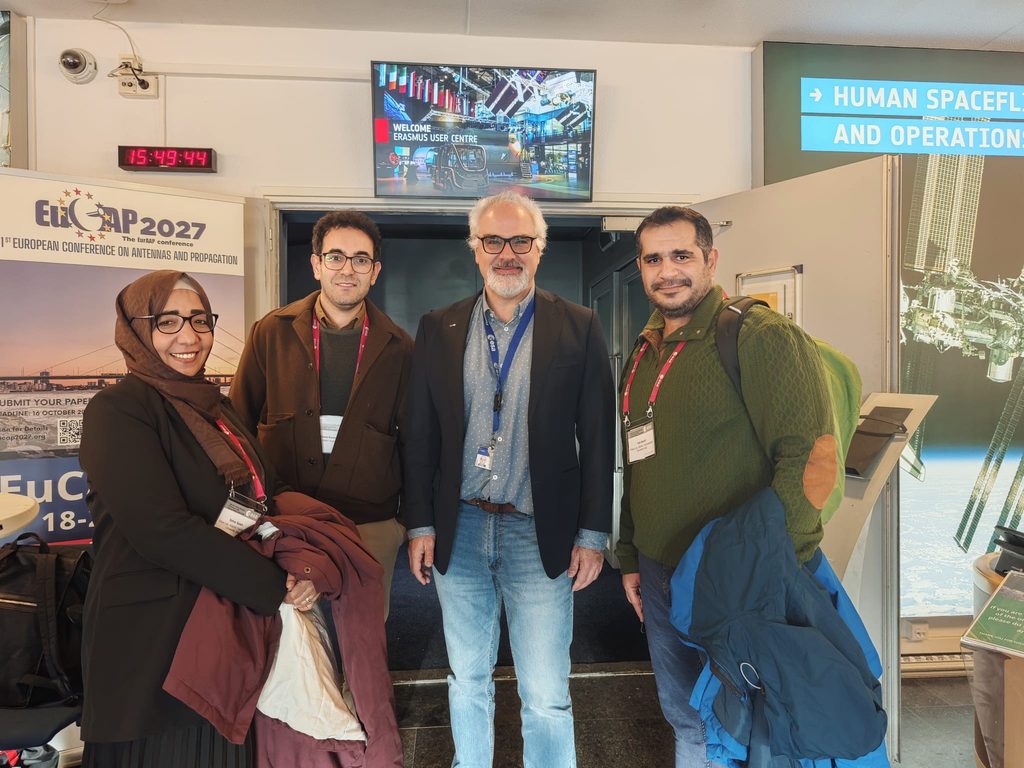
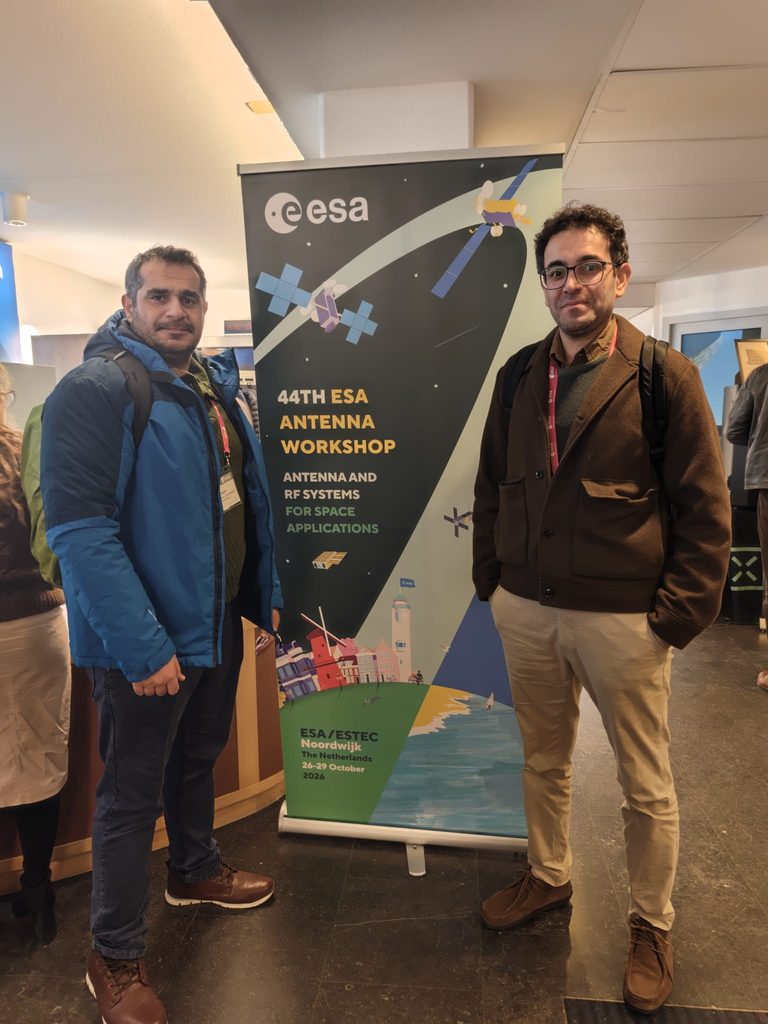
Researchers from WiSAR Lab and Technology Gateway at Atlantic Technological University (ATU) participated in the 44th European Space Agency (ESA) Antenna Workshop, held from 26 to 29 October 2026 at the European Space Research and Technology Centre (ESTEC) in Noordwijk, the Netherlands.
Dr Tale Saeidi, representing the SPEAR Centre, and Dr Sahar Saleh, representing the North West Centre for Advanced Manufacturing 2 (NWCAM2), attended the four-day international workshop, which brought together leading researchers, engineers and industry specialists to share developments in antenna technologies for space and satellite communications.
Both the SPEAR Centre and NWCAM2 are supported through the PEACEPLUS Programme, managed by the Special EU Programmes Body (SEUPB), and contribute to strengthening research, innovation and cross-border collaboration in advanced technologies.
The workshop provided an important opportunity for WiSAR researchers to present ongoing research, engage with international experts and explore opportunities for future collaboration with the European space research community.
WiSAR Research Presented at ESA
A key highlight of WiSAR’s participation was the presentation by Dr Sahar Saleh of the research paper, “Design and Full-Wave Analysis of a Compact Four-Port MIMO D-Band Antenna for Space Communication Systems.”
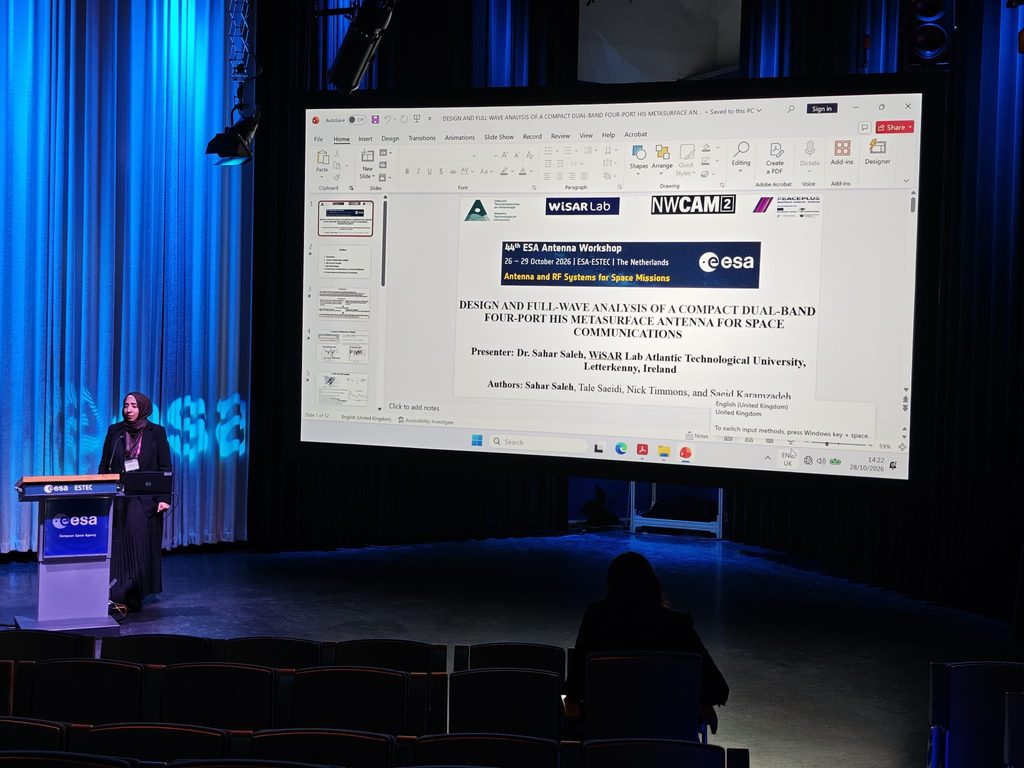
The research, supported by NWCAM2, was presented during the Antenna Technologies for Satellite Communications III session, chaired by Nick Cancrinus of Delft University of Technology (TU Delft) and Ines Barbary of ESA.
The paper examines the design and full-wave electromagnetic analysis of a compact four-port multiple-input multiple-output (MIMO) antenna operating in the D-band frequency range. These high-frequency antenna technologies are an important area of research for future satellite and space communication systems, where compact designs, high data transmission capacity and reliable connectivity are increasingly significant.
The presentation provided an opportunity to share research being undertaken at WiSAR with the international antenna research community and contribute to technical discussions on emerging communications technologies.
The workshop’s wider technical programme explored advances in additive manufacturing, all-metal antenna designs, antenna feeding structures and measurement techniques for next-generation space applications.
These developments are closely aligned with WiSAR’s research interests in millimetre-wave and terahertz (THz) communications. Insights gained from the workshop will help inform further research into reliable 6G and THz communication links for space and satellite applications, including the development of advanced feeding and transition techniques.
Building on Previous ESA-Funded Research
Participation in the workshop also provided an opportunity to revisit the outcomes of WiSAR’s previous ESA-funded collaboration with Silicon Austria Labs (SAL), “Enhancing CubeSat Communication: Beam Steering Antenna Systems.”
The project explored antenna technologies designed to enhance communications capabilities for CubeSats, a class of small satellites increasingly used for scientific research, technology demonstration and commercial space applications.
Beam-steering antenna systems offer the potential to improve communication performance by directing transmitted or received signals electronically, supporting more flexible and efficient connectivity between satellites and ground-based systems.
During the workshop, WiSAR researchers held discussions with Prof. Saeid Karamzadeh of Silicon Austria Labs and Dr Giovanni Toso of ESA, reviewing the outcomes of the previous collaboration and considering opportunities to build on this work through future ESA funding calls.
The discussions focused on areas including beam-steering technologies, MIMO antenna systems and millimetre-wave and D-band antenna design, reflecting the potential for continued research collaboration in advanced space communications.
This engagement represents an important continuation of WiSAR’s relationship with European research partners and provides a foundation for identifying new opportunities to translate existing research expertise into future collaborative projects.
Strengthening International Research Networks
Alongside the technical programme, the workshop facilitated engagement with researchers and specialists working across the European and international space technology sector.
WiSAR researchers engaged with Dr Hoda Nematollahi of ESA, organiser of the 43rd ESA Antenna Workshop, as well as Dr Adam Narbudowicz, Dr Amir Jafargholi and Dr Qi Li.
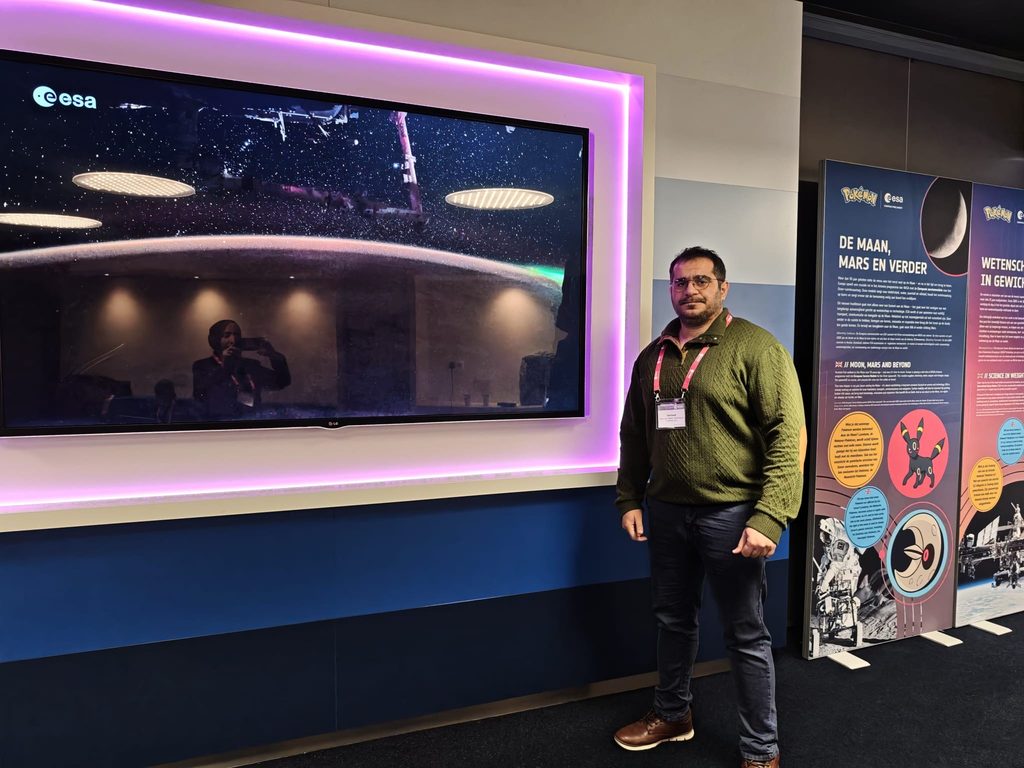
These discussions provided opportunities to exchange knowledge, explore complementary research interests and identify potential areas for future collaboration.
Engagement with ESA representatives and international research institutions is particularly valuable in supporting WiSAR’s continued development of expertise in advanced antenna systems, high-frequency communications and emerging wireless technologies.
The workshop also offered opportunities to gain insights into the technical challenges and research priorities influencing future satellite communications, providing context for ongoing and planned research activities at ATU.
Exploring Advances in Antenna Design and Testing
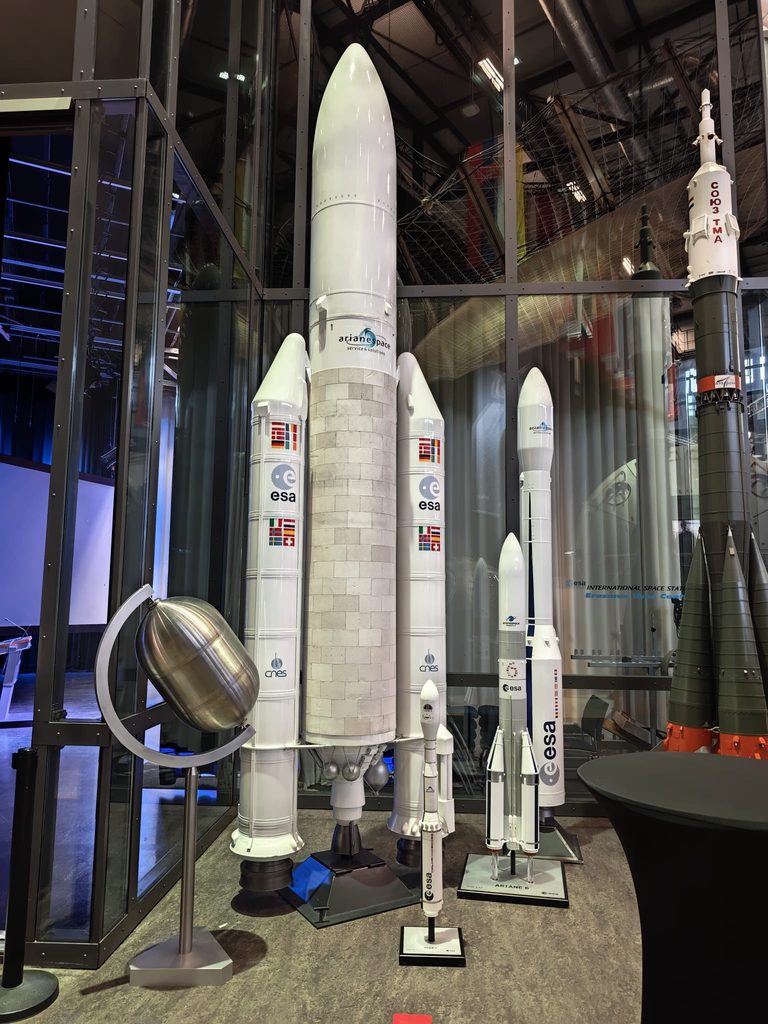
An important element of the workshop was the opportunity to engage directly with companies developing specialist technologies for antenna design, simulation and testing.
Demonstrations from ANTENNEX, TICRA, SWISSto12 and Optenni Ltd showcased a range of technologies, including advanced electromagnetic simulation and antenna design software, specialist antenna solutions and compact over-the-air test chambers.
These technologies play an important role in supporting the design, development and validation of increasingly complex antenna systems, particularly at the higher frequencies associated with next-generation communications.
For WiSAR researchers, the demonstrations provided valuable exposure to developments in the tools and testing approaches used across the space communications sector.
The combination of academic research presentations, technical discussions and industry demonstrations offered a broad perspective on how antenna technologies are evolving to meet the requirements of future satellite systems.
Supporting Research Through PEACEPLUS
WiSAR’s participation in the workshop was supported through two major PEACEPLUS-funded research and innovation initiatives, the SPEAR Centre and NWCAM2.
The SPEAR Centre is an €8.46 million cross-border research and innovation initiative led by Atlantic Technological University in partnership with Ulster University and Tyndall National Institute, with Seagate Technology as an associated partner.
The Centre focuses on advancing research and innovation in photonics and related technologies, combining doctoral research, industry engagement and strategic collaboration to strengthen research capacity and support technological development across the region.
NWCAM2, the North West Centre for Advanced Manufacturing 2, is a €9.98 million PEACEPLUS-funded initiative led by Catalyst, bringing together academic and industry partners to support research, innovation and advanced manufacturing capabilities.
Through these complementary initiatives, WiSAR is contributing to the development of specialist research expertise, strengthening connections between academia and industry, and supporting international collaboration in strategically important technology areas.
Participation in events such as the ESA Antenna Workshop provides an opportunity to share the outcomes of this research investment with international audiences while identifying new opportunities for collaboration and technological development.
Continuing Collaboration in Space Communications Research
The 44th ESA Antenna Workshop provided a valuable platform for WiSAR researchers to contribute to international technical discussions, present research supported through NWCAM2 and strengthen connections relevant to ongoing work within the SPEAR Centre.
WiSAR acknowledges the ESA organisers and the Antenna and Sub-Millimetre Waves Section for delivering the workshop, with particular appreciation to Dr Paolo Focardi and Salvador Mercader Pellicer for their engagement and support.
Building on the research insights, technical discussions and connections established during the workshop, WiSAR will continue to pursue opportunities for collaborative research with ESA and European partners, advancing its work in antenna technologies, high-frequency communications and next-generation space and satellite systems.

